
Mirwais Balkhi
Abstract
In 2021, Afghanistan was on the verge of catastrophic collapse due to a dramatic transfer of power from the Republic government to the Taliban. Much research has been conducted on the factors and variables that led to the collapse. Many have attempted to prove that the Republic was overthrown using a single-factor study. Still, the current research argues that a variety of issues occurring at the national, regional, and international levels are intertwined and precipitated the collapse. These horizontal tiers of issues include politics, security, and economics.
Keywords: the Taliban, Paradigmatic Corruption, Dependency, Regional Competition, Fraud Election.
Introduction
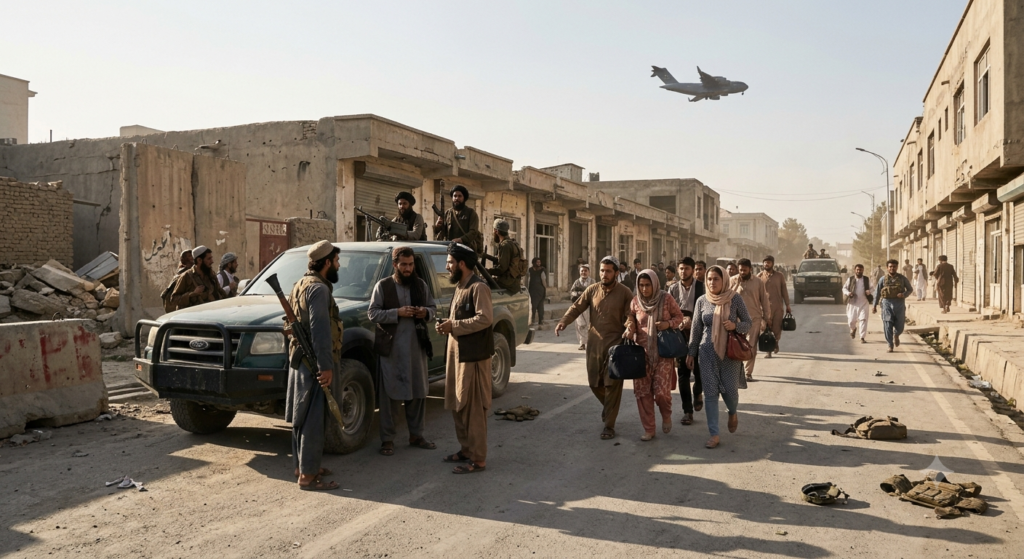
August 15, 2021, marks a pivotal turning point in Afghanistan’s recent history. Consequently, in a dramatic shift, the US-NATO-backed republic was overthrown and replaced by the Taliban, the enemy of US/NATO, and a radicalized Islamic group that symbiotically lives with terror, drug trafficking, and the elimination of any opposing faction. The 20 years of achievements in all aspects, like politics, institutions, economics, democratization, and civil society, vanished overnight. Like other Afghan political systems, the post-Bonn political order, which had emerged after years of war and civil strife, was overthrown by bayonet force and assault rifles. The US left Afghanistan without fulfilling any of the promises and goals it made twenty years ago, including democracy, equal rights for women, and the Taliban’s elimination. As a result of the new generation of Afghans’ efforts to achieve and have a democratic society free of discrimination and injustice, Afghanistan has once again reached the mountain of despair. This is Afghanistan’s eighth constitution in the last century, and it has been met with armed opposition and internal insurgency.
According to experts and analysts, several issues contributed to Afghanistan’s failure; while on the one hand, there were clashes between the Taliban and the government, on the other hand, some believe that widespread corruption was a significant factor. The Afghan government and US influence within this system paved the way for the Afghan people’s discontent and the Afghan government’s demise. Western governments and American generals who founded the Afghan army in the early twentieth century estimated that these forces could have resisted for up to six months at best and up to three months at worst without outside assistance. The main reason for Kabul’s rapid collapse was that the government lacked practical independence. The cooperation of Afghanistan with the interventionists was largely left to opportunists, corrupt politicians, private-sector entrepreneurs, and ambitious individuals, as well as the alignment of some ethnic groups and the support of secular social elites in large cities. Despite its appalling human rights record during its five-year rule at the end of the twentieth century, the Taliban never lost its credibility as a defender of the Afghan homeland, and many nationalist elements in the predominantly religious country remained loyal to it.
Afghan intellectuals must comprehend the reasons for the abrupt collapse of the Afghan government and ANA. Despite the many problems and shortcomings in government, millions of Afghan intellectuals hoped for a brighter future and a prosperous, democratic, and civilized Afghanistan within the framework of the Islamic Republic and the 2004 constitution. However, the Taliban’s victory with the ideology of Islamic law rule according to the Taliban’s interpretation, which has no rule in any country in the world, dashed these hopes. So many questions must be answered for future generations to have a clear historical understanding of this regression. Although the reasons for the behind-the-scenes deals that led to such an unexpected collapse are unclear, and the facts will undoubtedly become clearer over time, this article seeks to disprove the large, small, and scattered fabric of this complex age-old puzzle. Put them together to get a better picture of what happened.
Afghanistan: A Geopolitical Syndrome
Afghanistan’s strategic importance originates in large part from its location. In reality, Afghanistan has served as a crossroads for Central Asia, West Asia, and South Asia, as well as a boundary between land and sea forces and a stronghold for national, regional (Tanin, 2005: 8), and international rivals. Afghanistan’s geopolitical location has earned it the title of “bridge country” between Central and South Asia. Turkmenistan, Tajikistan, Uzbekistan, Kazakhstan, and Kyrgyzstan, which are rich in energy sources such as gas, electricity, oil, and other Central Asian raw resources, are to the north, whereas Pakistan and India, which are in desperate need of energy, are to the south and east. The raw ingredients have been arranged. Afghanistan has gained geopolitical, geo-economics, and geostrategic significance as a result of this crisis (Aria, 09/01/2017).
The country is primarily situated in the heart of the Asian continent and bordering three regions that overlap the surrounding regions: in terms of cultural and ethnic geography, as well as the continuation of the country’s territory in the aforementioned areas. Therefore, the country’s geographical location has posed challenges throughout its history, preventing stability, security, and, as a result, growth. The underdevelopment and insecurity in Afghanistan have become a geopolitical syndrome. There are indicators of underdevelopment and insecurity, which deal with issues like advancing Afghanistan toward instability, underdevelopment, and several other complex concerns, each of which has its solution that is contingent on other circumstances (Yazdan Panahdoro & et al., 2019: 798). Considering that, Afghanistan’s problems and challenges are internal and external, and they fall under the category of national, regional, and global restructuring and approaches. Internal and external causes are intertwined in Afghanistan’s political-security problem.
Thus, Afghanistan has a lengthy history of conquest, migration, and civil war. It is strategically important since it connects East and West Asia since ancient times. It was connecting the Indian subcontinent to the southeast, Central Asia to the north, and the Iranian plateau to the west, connecting three significant cultural and physical regions. It made the country one of the key targets of large nations seeking to consolidate their influence and empire by invading neighboring countries. The importance of the country’s geographical location is demonstrated by Alexander’s conquest of the region in 330 BC and the theater of rivalry between the two major countries of nineteenth-century Russia and Britain (Hasan, 10/03/2019) is the modern example.
Henceforth, if one is interested to understand the continuous collapse of a state in Afghanistan (at least 10 times since the 1880s), then it would be suggested to see all three-tier factors that interwind result in state failure. In the following, the paper discusses the most key factors behind failures at national, regional, and global levels.
Afghanistan Levels of Threats:
The conflict in Afghanistan is threefold; national, regional, and international. All the levels of analysis can individually introduce one level of the problem. Again, at any level, the issue is threefold; political, security, and economic. Henceforth, three-three both horizontally and vertically define the root causes of state failure in Afghanistan in all historical stages; the focus of this paper is on the recent case that happened on 15 August 2021.
- Enternal Challenges
The statement that countries act based on their nation having’s and capabilities is a proven one. The roots of the insecurity of a country may be traced outside its national boundaries, but internal fragility gives space to the external interventions to intervene in another land.
The first level of threats and insecurities of Afghanistan lies within its boundaries. The fragile condition and incapacities of Afghanistan aged half a century are one of the major factors behind all the risks and threats. That is correct that the problem of a country lies outside the borders of that country, but all roots of the challenges and problems depend on the national problems and the internal factors. Even in the civil war, different parties of the war will be supported by their external factors which may appear in a way that the external intervention in that country results in the war whilst the greed and power struggle in a country by different leadership resulted in civil war. The current threats and disorder in Afghanistan are the biggest challenges and potential risks for collapsing the country. Although many of these challenges and factors and Afghanistan began a decade ago. But the withdrawal of the international forces led by the United States of America resulted in the sensitivity of the situation and which has deteriorated security across the country. Therefore, the national challenges off Afghanistan our three folds. political decay, insecurities, and economic issue. the paper will discuss each factor with the ground evidence.
- Political Challenges
After the US presence in Afghanistan, the years; 2001 2014, and 2021 have marked turning points in the political destiny of Afghanistan; with no doubt that 2021 marked the graves concerns and changes in Afghanistan. Although after the EU’s presence in Afghanistan there were many hopes among the Afghan people and international partners in Afghanistan to develop democracy and coexistence among the people of different ethnic backgrounds in the country. There was the presence and direct support of The US and the international community in Afghanistan for a thriving democratic process but politically the reality was something else. Politically Afghanistan has been never stable from the very early presence of the US and the international community in Afghanistan. The initial political disagreement begins from the Bonn agreement which was fueled in the later years; because, in Bonn, the distribution of political power and government design was not anticipated (Maley, 2013: 257).
Many risks and political threats are enrooted in the past political history of Afghanistan and directed the decisions in the past 20 years between 2001 and 2021 and we’ll also continue in the future if they are not resolved. Ignoring political threads and disagreement by the Afghan leadership and the international community extended political threats and danger in the country which threatened any possible and potential integration coexistence living together within a single political boundary. The good part is that many of these political challenges and political threats are predictable and measurable to study and see what the possible means are to bridge the gaps and bring a political consensus over the destiny of Afghanistan as a land of minorities. I believe that facing a scientific and logical approach to the political problem in Afghanistan reduces the challenges and problems. A just and fair election as the soul of the democratization process, strengthening and thriving woman right in Afghanistan, neutral but positive foreign policy towards the region and the world, focusing on national discontents like identity, historical memory, national interests, or the most important parameters which can bridge the gap politically in Afghanistan.
- Fraud Elections
Elections in the past 20 years of the political history of Afghanistan have been not fair and just following corruption and frauds and the process of electing new political elites by then newly experienced people in the rural and urban areas of Afghanistan. the greedy and short-minded political elites emerged out of diaspora and supported by the international community in Afghanistan destroyed the sentiment of democracy among the people who were hoping to be democratic for their political future. elections in 2004, 2009, 2014, and 2020 hurt the democratization of Afghanistan. Political elites in Afghanistan and the common people believe that elections or the only way to get out of the instabilities and insecurities in the country. The success and unsuccess of a fair and just election were the criteria for the upcoming political tensions of Afghanistan. Even the international community and global partners of Afghanistan’s democratization process were emphasizing that Afghanistan’s focus and concentration over fair and just elections resulted in a political transformation in Afghanistan. The corrupted records of the 2009 election and political gaps scared and appalled the international community to deliver a strong message to the people of Afghanistan and the bureaucrats did not spoil the election committee and process in the country (International Crisis Group, 2012). The 2014 election in Afghanistan was seen as an opportunity to consolidate democracy in Afghanistan and compensate for 2009 election frauds and convince people that things are going on the right path. But election frauds of 2014 were more than that of the 2009 election. Though the election outcome was the formation of the national unity government in Afghanistan, it did not help legitimacy among the common people, strengthening the constitution of Afghanistan, bridging people and state relations, and prevailing security around the country. Afghanistan once again lost a great historical opportunity that inflicted the coexistence and its prestige at the national and international levels. Once again nation-state building specialists and scholars began to analyze the failures of the democratization process in a country that was already on the brink of collapse. Anticipations were not wrong, the government of the national unity though survived Falteringly but it was repeated in a little different format after 2020 election and broad Afghanistan to a total collapse.
- Destroyed Institutions
Almost the majority of political elites and common people in Afghanistan believe that the foreign troops’ withdrawal would possibly lead to the destruction of political achievements. 2014 was a nightmare for the people of Afghanistan, who were concerned about the political success and achievements they gained under the presence of international troops and the political support of the global community. The newly democratized and democratic values had already been under severe challenge and threats from the corrupt political leadership, and to add to the threats, the undemocratic Taliban forces.
Ethnic participation in the political process, consolidating women’s rights, and the increase in violence against women were the main concerns and parameters for the activists and international partners. Many international partners and national NGOs had expressed their concerns about the increase; four challenges were mentioned in reports and facts gathered from different villages and cities in Afghanistan (Izterabi, 2012). When the government of the United States was talking about a possible withdrawal from Afghanistan after 2014, the people of Afghanistan believed that the government of Afghanistan was not capable of keeping the status quo and preserving those achievements of the past 10 years. It happened along the line of the concerns of the people of Afghanistan. In contrast, in 2021 with the Taliban ruling in Kabul all the achievements of the past 20 years in Afghanistan collapsed overnight. In the morning of 16th August 2021, after the Taliban entered Kabul, the face of the city, which had thrived with democratic practices for the past 20 years, had changed to a city that had never embraced any social-political development
According to world Crisis Group which was anticipating in 2012 that if there is no justice and fair election in Afghanistan in the upcoming years of 2014 then there would be a deep crisis among the people of different ethnic backgrounds in Afghanistan; these anticipations turn through following their fraud in the election and a political crisis resulted in distressed and wrong competition among the leaders in the country. The same scenario was repeated in the 2020 election, which widened and deepened the gaps among the country’s political groups. Candace Rondeaux, a senior analyst from the Crisis Group, believed that the transformation of security responsibility from international forces to the Afghan National Defense Forces (ANDSF) could result in end-to-end security and capabilities for running a systematic, fair, and just election across the country (Rondeaux, 26/04/2013). Afghanistan was not ready to take the responsibilities of security and fighting alone against the Taliban threats in Afghanistan, which is why when the transformation stage was completed, there was the influence of the Taliban militia in the villages and rural areas in different provinces.
One of the main vulnerable groups affected by the country’s political collapse was the advancement of women’s rights. The women activists in Afghanistan and international partners were afraid of the newly achieved objectives and values for women’s empowerment in Afghanistan, which could collapse overnight because of the political and internal competition in Afghanistan. There was a belief that the Taliban leadership as an alternative to the Republic government in Afghanistan could take over the country and stand against all the women’s values and rights.
- Citizen-State Gap
The trust between government officials and the citizens of a country is one of the most important factors in determining the political stability of a nation. The extensive literature demonstrates that the implementation of the rule of law and the lack of coordination between the offices responsible for the bridges between people and the state lead to a reduction in threats to national interests. In Afghanistan, the discrepancies and pessimism about the governance and governmental system have led to widespread distress among the people. Different governmental departments, instead of empowering and institutionalizing civil services to deliver services to the people, were focused on accumulating power to combat the erosion of each other’s authority and negative competition among the holders of different offices in the executive, judiciary, and legislative branches. This overall exhausted the people and the legitimacy of the state system was gradually down among the people. The divide between the government system and the Afghan people widened after 2014, when security responsibilities were transferred to the Afghan people. The country’s political structure was overshadowed by the political agreement that followed the fraudulent 2014 election, which was further complicated in 2020. This distress of the people of Afghanistan over the political system resulted and the low participation, demonstrations, contradiction, and discouragement for the social mobility and running civil society which was eventually compelled many young generations to join the Taliban groups in the rural areas especially.
On the other hand, there was a huge gap between the political promises and the implementation of interaction. The political leadership in Afghanistan was announcing many promises and strategizing promises to the different people in the cities and the villages, which raised the expectations of the people. Since at the end of the day the political system failed to deliver these expectations, people were apart more and more from the government on a daily basis. After 2014, the lack of an organized plan and the coordinated steps between the promises and implementation delegitimized the political system in Afghanistan, and the trust of people in government officials and political leadership has degenerated.
- Political Judiciary
One of the major threats in any political system is the politicization of the judiciary, which leads to the failure and collapse of institutionalization of the rule of law. The intervention of the judiciary and the purpose of the misusing for a political objective was one of the most important factors behind a political failure in Afghanistan which was repeating gradually; for example, the disqualification of the ministers has been a responsibility of the National Assembly which was overruled repeatedly by the president and undermining by giving the credit to the Supreme Court of Afghanistan which endangered the stability of the political structure in the country.
Judicial politicization reduced the efficiency of the national institution in Afghanistan and made the citizens more distrustful of it. The lack of work and not a response to thousands of the cases in the judiciary system of Afghanistan had eroded its credibility among the people of Afghanistan especially when the people who were witnessed that the judiciary system is match influenced by the political objectives then ran independently to guard the rule of law in the country. It could not focus more on the process of handling cases and enforcing judgments independently to gain the consent and trust of the people of Afghanistan.
- Sub-ethnic nationalism
While ethnic diversity can be seen as an opportunity for countries paying little attention to ethnic sensitivities, ethnic diversity has been a serious challenge in Afghanistan. The government’s national institutions and lead personalities of Afghanistan have always struggled for ethnic supremacy in the offices at political cultural and economic fields. Based on lack of a common history and identity of different ethnicities destroyed the national security and unity and above all threatened the territorial integrity of Afghanistan. Improper domestic policies by the top leadership and political decision-making at the highest official posts undermined the national commitment and loyalty of the people of Afghanistan which damaged the sense of belonging for a national identity in Afghanistan. Increasing ethnic distances paved the way for the intervention and exploitation of outsider forces like regional powers which interims the country’s people weren’t against each other. These policies word brought in during well Hamid Ashraf Ghani. In this way, the government of Afghanistan in all the nations in a situation moved away from delivering services to the people to account for virtual ethnic issues and involved less in the sections of national programs based on their capacities and capabilities.
Many times, the government of Afghanistan or the nationalists exaggerated minor and marginal issues such as the use of the specific words and phrases related to the language resulted in the strong reaction of the other linguistic groups and field the ethnic and tribal divisions created more distances weekend the countries quote existence and paved the way for the outsider intervention and destroyed the unity of the people of Afghanistan. That particularly when Afghanistan needed a strong coexistence and a sense of unification after 2014 in which the transformation of the responsibilities of war against the Taliban was given to the Afghan National Defense forces. Coincidentally, Mohammed Ashraf Ghani presided as the president of the Republic in a political agreement with his rival presidential candidate, and his policies doubled the ethnic divisions.
Therefore, the political situation in Afghanistan over the past 20 years, from 2001 to 2021, was unstable due to the factors above discussed earlier. Although initially in the first years of American presence in Afghanistan and their focus on the democratization of the country through disarming the armed groups, there was space for national policies. But gradually, the Afghan diaspora, instead of implementing their learned experiences and qualities that they got from outside Afghanistan, living in their democratic and developed countries, concentrated on the nationalistic and self-interest politics to accumulate power, wealth, and being crafted by the power, they spoiled the political and democratic process and damaged Afghanistan politically.
- Security Challenges
In all countries throughout the world, security is the key to stability and comprehensive development, and the low quality of sustainable progress in all areas of life is dependent on the level of security. This is a critical occurrence for all political systems, regardless of their level of economic and social development or ideological orientation, and it is one of the most pressing and essential challenges. While security is beneficial in all aspects of life, at different stages of life, certain aspects become entirely secure and are inextricably linked to this phenomenon. Afghanistan would play a critical role in the rise, collapse, and maintenance of the status quo in the political, economic, and other spheres in 2021.
In addition to averting new threats, proper policymaking, and the use of legal capability in dealing with diverse political, economic, and security threats also prevent the abuse of the country’s foreign foes. In addition to what has already been described, there were additional security problems in the country. Given the armed opposition’s frequent, broad, and well-organized attacks on important places in Kabul and other provinces, it was apparent that the armed opposition posed a significant threat to the country’s security. First and foremost, there was concern that Afghan security forces would be unable to withstand the Taliban’s coordinated attacks. The lack of advanced combat weaponry among Afghan security personnel was a source of concern. The country’s air force, which was regarded as a critical aspect of every country’s armed force, was yet to be activated and equipped creatively and realistically.
- Internal fragility
One of the greatest concerns following the withdrawal of international forces was the depth of internal differences and the large gap between political, social, and ethnic forces, as well as the absence of internal consensus, even in the direction of major national objectives. Afghan officials had given less attention to creating national agreements and understanding of Afghanistan’s essential interests over the last ten years. People were concerned that these distances, which have resulted in further disputes, may once again bring the country to the abyss. The people’s anxiety was natural and does not rule out the prospect of Afghanistan returning to the 1990s when foreign soldiers leave. Concerning that Afghanistan’s armed forces will soon be unable of providing global security; it’s also feasible that after international forces leave in 2014, Afghan security forces may collapse in favor of parties and organizations, clashing among themselves, potentially reigniting the civil war. [9]
- Consequences of interference by Neighbors
Following the withdrawal of international forces, one of the security issues and key worries of the Afghan people was continued interception by neighboring countries in Afghanistan’s domestic affairs. Afghanistan’s neighbors have always viewed peace and stability in Afghanistan to be detrimental to their interests and have attempted to undermine the country’s security. This necessitated a boost in the country’s foreign policy’s vitality and assertiveness. Afghanistan had more courageous and transparent in raising the disputed issues with its neighbors and resolving them in the context of national interests.
Efforts to cooperate and accelerate cooperative economic projects that further unified the interests of neighboring countries, on the other hand, have made significant headway. The success of initiatives like CASA-1000 and TAPI, which combine our country’s and Pakistan’s interests, has a significant impact on ensuring Afghanistan’s security. Within the context of the Istanbul process or beyond, Afghanistan must strengthen regional convergence and concord.
- Economic Challenges
Rising the living difficulties unemployment and other economic problems due to the solution or at least reduction of the international aid to Afghanistan especially after focusing on Iraq crisis in 2003 there was an increased public distrust towards the government and the international community in a widened scope of unrests. The analysts and the scholars in Afghanistan were predicting a likelihood of the increase in securities and the civil war or running the Taliban’s victory after the withdrawal of the international forces. the people understood that the economy is a backbone of democratization and in a situation in a country like Afghanistan in which agriculture as the main source of income of the common people was destroyed and the international community before building on agricultural development and a working system of irrigation and decreasing of aid to the people of Afghanistan. The major cities were also not in a good condition for example in Kabul, the most populated city and capital of Afghanistan there was huge unemployment. Poverty, economic crisis, and rising crime as the main concerns which played a valuable role in the insecurities of later years, especially in the twenty 10s. some of these threats as mentioned are long-lasting and deep-rooted and emerged out of suspicious circumstances.
- Dependency on foreign aids
The weakness of the economic sector and poor policies in Afghanistan had worried the people that the government of Afghanistan without the support of the international community was not able to even receive a regular tax from the people and at the same time the government of Afghanistan is not able to pay the regular salaries of it is employees. From the very beginning (emerging as a modern nation-state in 1880), Afghanistan was dependent on international aid (Zia, 26/02/2022). Thousands of the qualified youths of Afghanistan were employees of the international institutions and international NGOs in Afghanistan. The presence of the foreign NGOs and international institutions in Kabul and other major cities paved the opportunities for many Afghans’ educated young generation who returned upon finishing their studies from outside Afghanistan or who are graduated from national universities to be employed and work there and gain a good source of salary. When the international troops reduced their forces in Afghanistan and there was a rumor that the United States and international allied forces would withdraw from Afghanistan in 2014 many of the international NGOs and international institutions reduced their offices in Afghanistan as consequentially resulted in the unemployment of these Afghan qualified young generation in the country many of them taught to leave Afghanistan which resulted to brain drain from the country. At the final stage with the evacuation, of the international and NATO troops, the remaining of these qualified brains also left the country to different destinations; a limited small, qualified Afghans are left behind in Afghanistan currently.
The government of Afghanistan could not pay attention to constructive economic plans like building infrastructure facilitating trade working on routes and transportation lines and mining. Although there were rules and regulations discussions team groups seminars and many other protocol programs were not implemented in action. With the help of international aid, the construction of dams to help irrigation and agriculture and to generate electricity and other national leads though began late but it was a promising hope for the people of Afghanistan in the 2010s.
- Consumer status
The government of Afghanistan and internationally supporting institutions could not balance exports and imports of the country’s economy and Afghanistan remained a consumer to survive. From the very beginning in 2001 Afghanistan remained a consumer which needed to import everything from outside its borders. Of course, when a country does not have production of it is own then it needs to import all the needed things from outside the country and this was the case for Afghanistan in 2020 years. This situation raised another reality that the total dependency of Afghanistan’s economy on the import of the goods from outside the borders increased the weakness of Afghanistan; for example, Pakistan only ran as two neighboring countries found a good opportunity to turn Afghanistan into a dependent market for its production. It also fueled the insecurities of Afghanistan throughout the 20 years.
- Class gaps
Justice orientation is one of the most important stabilizing factors in a country wherein Afghanistan was missed. Despite many opportunities in the past 20 years, the path to justice in Afghanistan was very slow. There was initially relative welfare society which increased, and it turned society to experience changes in different aspects but in the aspect of the class divide between the rich and poor and especially after 2010 the distinction between the poor and rich reached its peak. The wealth of the rich and having-class increased dramatically while the poor became more impoverished. there was illegal wealth that amassed millions or billions of dollars through corruption, bribery, theft of government goods and budget without clear accountability and audit. while on the other hand, the other section of the society was suffering to provide a minimum sustain to pay their rent. The government posts and positions in Afghanistan especially the financial sections whereas the source of income to acquire wealth were being sold by the top leadership. A paradigm corruption was aligned with posting officials to the higher positions which immersed luxuries and disregarded the demands of suffering people. The social gap among the people economically remained a major threat after 2014 which was not answered. In this way, the situation required accurate and long-term planning to prevent illegal uses and a fair distribution of opportunities ends but did not happen.
- Unemployment
The labor market downturn was one of the threats since 2001 which was increased in 2014 due to the rumors of the withdrawal of international forces and unemployment of thousands of citizens. Lack of business opportunities increased the tendencies of young forces to join the armed oppositions and leads some to take drugs and commit illegal acts. The government of Afghanistan was though saying and talking about the importance of job creation, but it was not seriously pursued according to the capacities in Afghanistan. The relevant authorities did not take the necessary steps put embrace long-term entrepreneur plans. One of the major opportunities for the government of Afghanistan was the unemployed qualified young generation who were unemployed by the international institutions after decreasing their presence in Afghanistan which could be a good opportunity to join the governmental system and run the government.
- Capital flight
Another important issue of concern was the flight of capital from Afghanistan. capital flight was directly related to the security of Afghanistan and the major cities and rural areas. This means the more insecurity there is in Afghanistan the more capital was flowing out of the country of course it must be said that capital was not only material capital but also all qualities like even spiritual and human capital of the country. People were worried that the government was not dealing with the economic political and post international withdrawal trades that is why many experts and specialists were taught to leave the country and settle outside Afghanistan. As a result, there was money flow, increasing poverty, rising unemployment, and continuous weakness in Afghanistan. Therefore, the total economic collapse as a weakness undermined popular dissatisfaction on the one hand, and on the other hand, it determined government power and ability in various areas of services and the total consequence was losing control over the insurgency across the country.
- Regional Challenges
The regional level is one of the most influential factors in determining a country’s fate, as well as one of the most significant levels of security for all countries. Neighbors can pose the greatest immediate risks to another country’s security and national interests due to their physical proximity and shared boundaries. The adjustment of relations with countries in the region, particularly Pakistan and Iran, has been one of the most significant obstacles to regional security and Afghanistan’s foreign policy over the last few decades. The presence of historical concerns, territorial claims, and some ethnic-religious divides, as well as the imbalance of relations with various and conflicting groups, are the most significant factors influencing the creation of good relations with some neighboring countries. For many reasons, such as highlighting difficult topics and giving more attention to such matters than is necessary, tensions between the countries of the region have occasionally reached the greatest conceivable level, posing severe obstacles in relations with neighbors. On the other side, keeping contested problems hidden and not daring or addressing them by various parties is a bad idea. It is incredibly valuable to address these challenges and provide answers to them. These issues, if ignored, can become a source of friction and strife in ties between the region and its neighbors. In this article, we look at three types of issues facing Afghanistan’s regions:
- Political Challenges
Each country’s external threats originate from within its borders. Internal flaws in numerous domains are used by the foreign enemy to destroy the interior, rendering the enemy’s foreign policy realm defenseless and allowing it to be sprayed. It highlights that each country’s opponents send devastating letters from within the country’s borders. There’s no denying that internal issues are at the root of external interventions. Afghanistan is transitioning from internal weakness, such as a lack of security and critical infrastructure, to a lack of legal and organized grounds in many areas, to development and structuring. Because of the country’s recent history, the presence and influence of its neighbors have grown significantly. Despite the Afghan government’s best efforts over the last 10 years, neighboring countries continue to play a key role in Afghanistan. Interventions by neighboring nations, as well as negative propaganda from terrorism and opponents working against Afghanistan’s national interests at the regional level, are among the problems the country will face beyond 2014.
Weak political institutions, crises, management, corruption expansion, and administrative disintegration are all characteristics of transitioning countries, and Afghanistan is no different. The quick pace of change at the regional and global levels needs strong decision-making capability and dynamism in Afghanistan. In the first instance, Afghanistan’s foes try to take advantage of the shift. They want to accomplish their demands through disrupting and corrupting the government, parliament, as well as the institutions and persons that makeup society. In a variety of ways, Afghanistan’s foes are aiming to sow instability by creating conflict, division, hopelessness about the future, and weakness. Such actions and thoughts are like ticking time bombs that erupt with time.
- Covert Actions
A government or group’s attempt to penetrate the activities of Afghanistan or its territory without formally announcing its presence has been a great concern of all time. As the term implies, covert action is an intangible and hidden technique used to achieve harmful and destructive aims. Espionage, instigating competing organizations against one another, organizing demonstrations, boosting anti-peace forces, and developing and gathering intelligence for clandestine purposes are only a few examples. They have taken advantage of and benefited from the two countries’ long-standing relationship. When the presence of international soldiers had narrowed after 2014, then there were more signs of the covert actions against Afghanistan from almost all countries of the regions around Afghanistan into Kabul and other parts of the country. Their concerns of the people that, following the withdrawal of international forces, neighboring countries may intensify their clandestine movements to influence the country’s political, economic, and military issues, has happened. The evidence of the covert actions by the immediate neighbors of Afghanistan increased even before the international troops leave Afghanistan, the government of Afghanistan, media and local people convey many messages with evidence from localities that how the assets of foreign countries fuel the conflict and many other ends.
- Outside corruption
The enemy’s destructive methods include directing other people’s behavior in the direction of their national interests rather than advocating against the rival through propaganda via various means such as radio, television, diplomacy, etc., as well as using various psychological methods. The psychological dimension of foreign policy and influencing public opinion, as well as the possibility of inciting groups of people in one country against the national interests of another, has become very important with the advancement of communication and the speed with which information and rumors are received. Afghanistan’s neighbors, particularly Pakistan, continue to use all these methods to propagate against the country’s national interests. Many Pakistanis operate in the Gulf states’ press and other fields and are targeted by Pakistan in specific directions, disseminating poisonous propaganda and poisoning Afghanistan’s national interests. This issue exacerbates the deterioration of relations and the country’s overall national interests. Rumors and fabrications continue to inundate public opinion in the region, as well as within Afghanistan itself. The country’s stability is jeopardized by the continuance of targeted media and political manipulation, as well as intelligence and damaging efforts against Afghanistan’s national interests. Keeping Pakistan’s policies of opportunity and empowerment in place.
- Competition among regional powers
Afghanistan’s people were concerned that their country could once again be at the center of a power struggle between regional countries with different, sometimes conflicting agendas. Iran, Pakistan, and India all have diverse interests in Afghanistan and the region. Those pursuing divergent and conflicting political, economic, security, and religious interests may turn to Afghanistan as a source of pressure in the vacuum left by the withdrawal of international forces from the region in 2021, and accordingly, they are worried. There have been various ups and downs in relations between the governments of Afghanistan and Pakistan administrations over the last decade. During the last 10 years, Pakistan has pursued a two-pronged strategy: on the one hand, to support the status quo and insecure trend, and on the other, to strengthen, train, and carry out suicide and bomb assaults. Pakistan was well aware of the problems with the Afghan government and was working to bring in a few key actors by 2014.
2.2. Security Challenges
Security has always been one of the most essential concerns of the region throughout history, and it is one of the most important factors in the development and fall of governments in numerous industries today. For many years, the issue of security has been a big difficulty for the Afghan government and people, and the problem has not been solved more than a decade after foreign soldiers arrived in the country. Security influences and is influenced by progress in numerous sectors. At this juncture in history, when boundaries are being tightened in various spheres of life and countries’ interests and interests are closely linked, geography plays an important role in presenting difficulties and opportunities. Because of their geographical proximity, neighboring countries are more affected than others. The regional countries’ security approaches, particularly Pakistan’s, do not help to develop regional cooperation and stability. One of the most serious risks is the escalation of tensions and the sharpening of disagreements between the region’s countries and Afghanistan following the withdrawal of foreign soldiers. Pakistan has so far attempted to pursue a strategy based on unilateralism as a platform for empowerment by employing the weapons of terrorism and extremism. Interacting with a series of internal and external obstacles is necessary for increasing or diminishing security threats:
- Security forces’ reliance on foreign help
The Afghan security forces’ reliance on foreign aid, as well as their weaknesses in different domains and, eventually, the lack of a clear plan for donor countries to equip and rectify shortfalls, had lowered their defense expectations. The situation in Afghanistan clouded and alarmed by increased foreign participation, the transfer of security responsibility, the severance, or the decline of international aid. One of the issues Afghan security forces faced was countering involvement from neighboring nations and terrorists, which will become more formidable with the exit of international forces. Therefore, both in logistics and thinking, the ANDS was akin to the US/NATO. When the US left Bagram military base and transferred logistic responsibilities to the Afghanistan Defense Ministry, the ministry and in total, the government of Afghanistan was not able to deliver services to the forces and a gap was created on thinking strategy on the ground.
- Military imbalance in the region
Afghanistan’s military and security forces are not balanced in comparison to those of its neighbors. As a deterrent, the balance of military forces can keep the region secure. However, in terms of commanding the level and kind of equipment, the composition of the forces, the culture and degree of training and readiness, and the number of personnel, the Afghan military differs significantly from that of the region’s countries, particularly Pakistan. As a result, ensuring the country’s security by military procedures is extremely challenging in the short run. Pakistan’s actions are considered a danger to Afghanistan’s national security because of domestic and regional conditions, military divisions, and policy inconsistencies.
- Terrorism, arms trafficking, and drug trafficking
One of the most serious dangers before the withdrawal of international forces was the continued existence of safe havens, terrorist equipment, and financial centers on Pakistani land. Three things control the ostensibly free tribal territories controlled by Pakistan’s political class. These three locations serve as safe havens for terrorists, gun dealers, and drug traffickers. Hundreds of extremist camps and training centers can be found in these places. Terrorists use these trained centers to disseminate destructive operations around the world. Terrorists cannot do anything without firearms; hence the arms trade is unrestricted in these places. These areas are home to most drug processing facilities.
Weapons and narcotics are lucrative businesses for ISI generals and officials (Kartha, 2000). Afghanistan, therefore, improved its national unity, cohesion, and solidarity, as well as found constructive political, economic, military, and cultural solutions to close the gap with its neighbors. Indeed, the country’s political, economic, and military objectives are aimed toward fending off regional and international challenges. Although Afghanistan has always worked hard to earn the trust and confidence of its neighbors in its political, economic, and security ties, this move was the result of the neighbors’ military-security approach to improving the situation and maintaining security. Afghanistan has a poor level of efficiency. Afghanistan could not strengthen regional cooperation projects by using transparent and bold letters to resolve disputes with its neighbors.
- Economic Challenges
After 2014, Afghanistan’s economic security has become a key worry. Due to the operations of numerous national and international players, Afghanistan’s economy has expanded its need for foreign aid over the last ten years. One of the most significant parts of this truth is that most of the international aid has been spent through foreign channels thus far. One of the key issues facing the Afghan administration is strengthening the national economy’s foundations and removing the country’s reliance on foreign countries. Following the retreat of international forces, elites and thinkers regard economic issues as a danger. Without a question, the economic crisis has had far-reaching consequences for other national ideals. The national spirit is weakened by economic difficulties and welfare hardship. The economic crisis has unquestionably had far-reaching consequences for other national values. Economic problems and welfare deprivation stifle national pride and stoke social unrest, exacerbating internal tensions (Azar-Moon, 1988: 368).
- Economic Competition
There have been all competitions among the nations around Afghanistan where Kabul had to balance them for its interests; from memorandum of Understanding between India and Afghanistan on Cooperation to Turkmenistan Gas Pipeline Transfer through Afghanistan to Pakistan and India, Afghanistan’s water resources, and many other projects which benefited Afghanistan but many of them left unresolved challenges. It was also competitive in its dealings with the other countries in the region. The increased proximity of Afghanistan to India, Pakistan’s regional adversary in terms of politics, economy, and security is cause for concern and promotes Pakistan’s unfavorable policies against Afghanistan. Some speculate that once the International Security Assistance Force departs Afghanistan, regional countries may vie for more influence in the country. The deterioration of Afghanistan-India relations has undermined Pakistan’s standing in the country and increased its sensitivity. Due to numerous initiatives, the Afghan government has entered a period of political friction with its southern neighbor. The Afghan government is paying a high price for the tensions because Pakistan supplies a large portion of its food. Pakistan has consistently harmed Afghanistan’s economy by abusing its position as one of the country’s commerce routes. Foreign troops’ presence: The presence of foreign forces, particularly those from the United States, who are likely to continue in Afghanistan after 2014, is one of the concerns that affect Afghanistan’s ties with neighboring countries. The presence of international forces in Afghanistan is a fantastic opportunity to safeguard and reconstruct the country, but it also comes with its own set of obstacles. In the world community, there are significant sensitivity and misgivings regarding this presence, particularly in Islamic, Arab, and adjacent countries. Concerns span from these forces’ domination and impact in the country’s many political, economic, social, and cultural sectors to the expansion of our international ties. Beliefs and concerns that Western countries are influencing Afghanistan’s major political and economic decisions, as well as manipulating social and cultural issues to their liking, have sparked religious sensitivities in Islamic countries, as well as a desire to invest in the country’s natural resources. Weakens. Concerns raised by Iran concerning the presence of US and ally forces in NATO have yet to be addressed. The Afghan government has thus far failed to give the required assurances that its territory will not be utilized to harm other countries’ interests. As a result, it is believed that Iran will not only lose interest in building bilateral relations in numerous spheres but will also collaborate with Taliban terrorists. According to Foreign Ministry Spokesman Ramin Mehmanparast, reported on Iran’s concerns following the signing of the Strategic Partnership Agreement between Afghanistan and the United States. Iran and the region’s countries (Mehmanparast, 2012). The issues are linked to several internal issues.
- Infrastructural Flaws
The lack of basic infrastructure in the areas of transportation, trade, investment, and electricity, has reduced the interest of countries in the region in participating in Afghanistan’s different economic industries. There is no doubt that the utilization of external and internal capital requires a high level of protection. However, it should be recognized that security in its military sense is simply one aspect of security. Political, economic, social, and cultural security are all important aspects of security to consider. This can be accomplished by meticulous planning in the areas of politics, economics, security, and law. Regional collaboration and investment in Afghanistan by regional countries can help close some of the post-2014 gaps. Afghanistan should endeavor to mitigate the flaws in this way.
Another economic hazard to the country is the country’s weakness and lack of work in macroeconomic management. The lack of efficient economic letters, clear and modern customs, commercial, and tax laws, the complicated system of land access, the lengthy stages of registration and obtaining permits, and the presence of corruption and bribery in Afghanistan’s offices all pose a threat to the country’s economic progress. This has alarmed donor countries and lowered the confidence of regional and adjacent investors.
- International Challenges
The international level of challenges is the greatest level of concern for countries. Any threat at this level can jeopardize a state’s national interests and security, either directly or indirectly. One of the major concerns of the people of Afghanistan was the existence or growth of threats against Afghanistan’s national interests at the international level following the withdrawal of international forces. Without a doubt, any threat at this level can have an impact on the country’s interests and national security. On the other hand, Afghanistan’s still-developing system was largely reliant on international aid in a variety of areas and confronts numerous local challenges. Afghanistan’s military, which could oversee maintaining security in the country, was short on professional personnel, training, and equipment. People were concerned that if international help was stopped, the Afghan government was unable to fund and equip its troops. The Afghan military required approximately $4 billion per year, according to expenditure data. At the international level, the following were the most serious dangers to Afghanistan:
- Political Challenges
At the international level also Afghanistan would have faced political challenges which would have weakened the countries’ newly built state. Different countries in and out of the region of Afghanistan did not have a regional or inter-regional or eventually intra-regional consensus on politics which could result in proxy confrontations.
- Political isolation
Afghanistan came to the attention of the world after 9/11 and the entry of the international community into the country. To battle terrorism in Afghanistan, more than 40 countries have sent soldiers. Several foreign countries had expressed interest in collaborating in a variety of areas. In general, the world community’s attention has been drawn to Afghanistan and the war against terrorism. Following the retreat of the Red Army, it was now feared that Afghanistan, like the 1990s, can be forgotten. Afghanistan’s neighbors, without a doubt, were eagerly anticipating this day. With the exit of international forces, these countries will attempt to deepen their meddling in Afghanistan’s internal affairs and once again take the lead. With the exit of international forces, these countries could strive to expand their meddling in Afghanistan’s domestic affairs, leading the country back to the brink.
- Rivalries in politics
The long-term presence of armed forces was seen as a danger to national and regional security by several bordering countries and the area. Some fear that the US, UK, and NATO see Afghanistan as a gateway to Central Asia, a siege on China, control over Russia, and a threat to Iran. Iran was afraid that Afghanistan could be used against it as leverage and a source of pressure. In terms of national security, Russia and China are concerned by the presence of competitor global powers in the geostrategic space of Russia’s southern and western Chinese borders, particularly the United States and Britain. As a result, the countries in the region are not impartial in the developments in Afghanistan, and they are concerned about NATO’s presence in the country, which is allowing for influence in Central Asia. These competitions make the Afghan political system’s job more difficult. As a result, the Afghan policy-making system must develop the ability to play between extremes, to be close to all groups while being neutral.
- Security Challenges
As important as Afghanistan is to the world in combating terrorism, the terrorists value the failure of the counter-terrorism process just as much. As a result, the withdrawal of international forces, combined with other significant circumstances, is viewed as a security vacuum, encouraging terrorists to return to the country. According to some security experts, the withdrawal of international forces from Afghanistan created a security vacuum, which encouraged terrorists to return to their previous locations. As the withdrawal date approached, the Afghan security forces lacked advanced light and heavy weapons. The Afghan Air Force currently lacks both equipment and fighter jets. Many others are worried that these forces will not be able to fill the void.
Global trends, particularly in the Arab world: Popular upheavals and new developments in the Arab world in the 2010s, which began with the Tunisian movement and spread to other Arab countries such as Egypt, Libya, and Yemen, ushered in profound changes in a variety of disciplines. These are significant worldwide happenings that have a significant impact on the national security of several countries throughout the world and in the region, including Afghanistan. Through violent means, this chaotic stream has undermined the philosophical foundations of change, expanding aspirations for peaceful transformation. Many were obliged to pursue their group and religious interests in the context of peaceful activities, rather than carrying weapons and engaging in destructive struggles, because of this beneficial sobriety. Al-Qaeda and the terrorists’ strategy were severely crippled because of this. However, recent events in Egypt and Syria have cast doubt on this tendency, putting the fate of Islamic countries, the world, and the region in jeopardy. On the other hand, due to its unique traits and religious links, changes in the Middle East have always been a significant element shaping Afghanistan’s national security. The Middle East has had a significant impact on Afghanistan’s growth during the last few decades, benefiting in certain situations while harming others.
- Economic Challenges
Because Afghanistan’s economy has been reliant on international aid for the past 10 years, many people were concerned that after international soldiers leave, international aid would be reduced. Despite several variables, the following concerns were growing:
- Donor countries’ economic crisis
One of the concerns for the Afghan people is the worldwide economic crisis, as well as the developing economic issues of several donor countries in Afghanistan. Donor countries, which are primarily involved in Afghanistan’s fight on terror, are frequently affected by the economic crisis. Despite numerous attempts to mitigate the impacts of this spreading epidemic by modifying legislation and expanding government support, the disadvantages of the situation, such as a drop in GDP or drop-in family welfare, have worsened. The amount of damage inflicted by the crisis is more than what analysts anticipate, according to the former chairman of the Standards and Ports Institute, and it is estimated to be around $ 15 trillion. (Mark Adelson, 1391) They will rethink their aid to Afghanistan as a result of the crisis and the withdrawal of their military and may reduce or shut altogether aid. Afghanistan faced a slew of issues because of this.
- Aid concerns
As expected, international aid has had little impact on the lives of ordinary Afghans over the last ten years. Various organizations have released numerous reports on the disruption of assistance management by domestic and international customers. This increased donor confidence, particularly public opinion, in donor countries that have a crucial role to play in aid halting. People throughout the world want their generous contributions to make a difference in the lives of those who receive them.
- Paradigm Corruption
Corruption, the presence of armed opposition, and other failures and aid in Afghanistan have weakened the international community’s will to continue assisting Afghanistan. Donor countries’ enthusiasm in developing the economy and paying Afghan security forces had warned due to uncertainty about Afghanistan’s future. Despite numerous and serious pleas from NATO member countries to fund the Afghan military, just a few countries have made explicit promises. The Afghan government addressed these concerns and take the steps necessary to overcome them.
Conclusion
The government is a symbol of authority and a protector of the people’s will, peace, and prosperity. The scope of its responsibilities, which includes the safeguarding of all national interests, is unalienable. One of the most essential and fundamental of its practical functions is the fight against any internal or external threat to national security, national peace, public order, and, ultimately, government authority. Internal order and stability, as well as political order and participation, empathy and popular thought, and confidence-building activities, should all be high on the agenda. Public engagement, political groupings, and social institutions in important national initiatives, as well as tolerance and legalism, boost the political system’s legitimacy and lessen vulnerabilities in many sectors. The greatest threat to Afghanistan is functional divergence owing to ethnic, religious, or sectarian concerns.
Although it looks too early to give a definitive response about the consequences of foreign troops leaving Afghanistan, one issue sticks out in the thoughts of the country’s authorities and citizens: the dread of instability once they left. Rising instability, the resurgence of civil wars, foreign involvement, the loss of previous successes and democratic standards, and increasing violence against women are among the main concerns. Afghanistan faces a variety of external and local threats. International, regional, and national threats are the three types of threats.
Today, there is not a legitimate representative of the people of Afghanistan to take seriously the country’s citizens’ worries about potential risks after 2021 and devise short- and long-term measures to meet the difficulties. As a short-term solution, the presence and survival of some international forces, particularly the United States, in Afghanistan are undeniably important. This presence will aid Afghanistan in achieving a long-term solution that will strengthen national solidarity, position Afghanistan as a crossroads for various global and regional interests, thoughts, and ideas, and strengthen democracy and comprehensive development.
In the long run, the protection and development of national interests can be achieved by designing and formulating a coherent plan based on the indigenous model. A model that is created by considering the country’s political, economic, cultural, geographical, and environmental needs to pave the path for success in various areas. Without a doubt, what Afghanistan lacks first and foremost is a consistent and comprehensive strategy that serves as a lighthouse for government and national authorities as well as stakeholders. The following issues should be prioritized in the strategy.
Bibliography
Tanin, Zahir (2005), Afghanistan in the 20th Century, Tehran: Erfan Publication
Aria, Sultan Ahmad (2017), Geographic Location of Afghanistan and Its Role on Development of the Country, Accessed Online on 10/03/2022: https://www.khorasanzameen.net/php/read.php?id=4122file:///C:/Users/mb2610/Downloads/24513980141.pdf
Hasan, Nila (10/06/2019), Why and How Afghanistan Geography is Determining? Accessed Online on 12/03/2022; http://www.dailyafghanistan.com/national_detail.php?post_id=148097
Maley, W. (2013). State building in Afghanistan: challenges and pathologies. Central Asian Survey, 32(3), 255-270.
International Crisis Group Annual Report, 2012, Accessed Online on 18/03/2022; https://www.crisisgroup.org/latest-updates/report?page=2
Izterabi, Zahir (2012), Post-2014 Afghanistan has Terrifies Everyone, Accessed Online on 01/12/2020; www.bamdad.af/dari/text/story/1734
Rondeaux, Candace (2013), Interview in Tolo TV on Afghanistan After 2014, 26 April 2013.
Interview with Ehsan Zia, Former Minister of Rehabilitation of the Islamic Republic of Afghanistan on Afghanistan’s Self-Reliance; 26 February 2022 at Istanbul-Turkey.
Kartha, T. (2000). Organized crime and the illegal market in weapons in Southern Asia. Strategic Analysis, 24(2), 403-422.
Azar, Edward E., and In-Moon, Chung (1988), National Security in the Third World: The Management of Internal and External Threats, Edward Elgar Publishing.
Mehmanparast, Ramin (2012), Peace, Freedom, and Social Justice, Accessed Online on 22/04/2021; paknehaad.blogspot.com/2013/01/1391-22-2013.html
Yazdan Panah-doro, Kiumars & et al (2019), A Strategic Analysis of Internal Factors on Territorial Logistics in Afghanistan based on Geopolitical Arguments, Journal of Nigarishhai Naw dar Goghrafia-e-Ensani, Year 12, No. 1, pp. 798-824.